
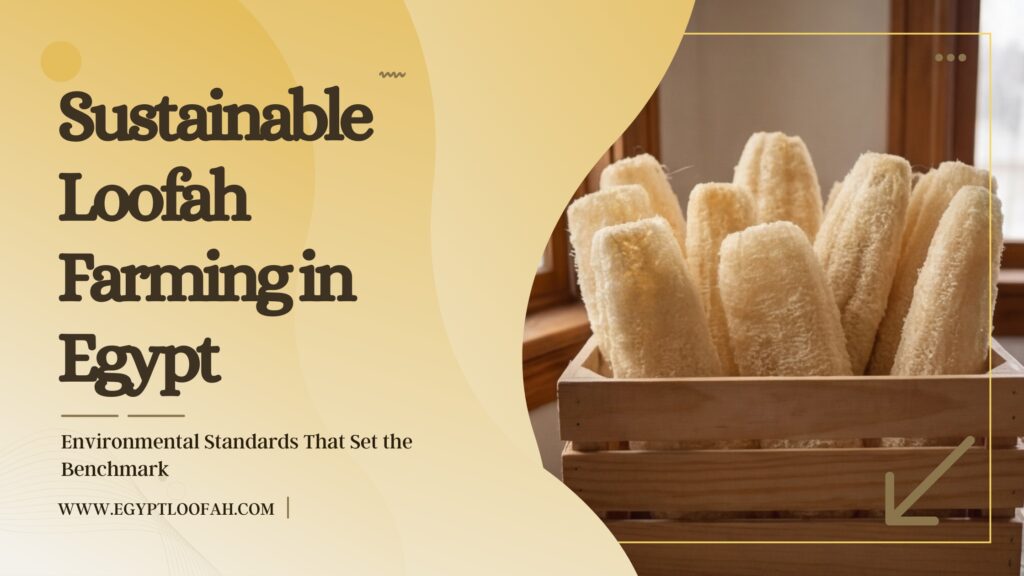
Whether you are a spa owner seeking reliable bulk suppliers or a consumer looking for eco-friendly bath alternatives, understanding how Egyptian farmers cultivate these remarkable gourds reveals why authenticity matters.
The Nile Valley has nurtured loofah cultivation for centuries. Today, this tradition combines ancient agricultural wisdom with modern sustainability protocols that international buyers and environmentally conscious shoppers both demand. Egyptian loofah farming represents more than crop production. It embodies a commitment to water conservation, soil health, and zero-waste manufacturing that few agricultural sectors can match.
This comprehensive guide explores the environmental standards that make Egyptian loofah the preferred choice for distributors across Europe, North America, and Asia. You will discover quality benchmarks that help procurement managers evaluate suppliers effectively. Consumers will learn how these farming practices translate into superior products for daily use.
EGEXO’s management system is certified to ISO 9001:2015, ISO 14001:2015 and ISO 45001:2018. Its good manufacturing practices are certified to ISO 22716:2007. We also hold a Certificate of Origin or EUR.1, a Phytosanitary Certificate and an Export License. Their farm to export process demonstrates how traditional methods merge with contemporary environmental standards to deliver exceptional products for every market segment.
Why Egyptian Loofah Farming Leads Global Sustainability Standards
The Geographic Advantage of Nile Valley Cultivation
Egypt’s unique geography creates ideal conditions for sustainable loofah farming Egypt operations. The Nile River provides natural irrigation through an ancient flood plain system that minimizes artificial water consumption. Loofah plants thrive in the region’s warm climate, requiring fewer resources than cultivation attempts in other countries.
The fertile silt deposits along the Nile eliminate the need for synthetic fertilizers in most growing areas. Egyptian farmers have maintained soil productivity for thousands of years using crop rotation and natural composting methods. This geographical blessing reduces the carbon footprint of loofah production significantly compared to farms in regions requiring intensive soil amendments.
Temperature consistency throughout the growing season means Egyptian loofahs mature evenly without climate-controlled interventions. The natural drying conditions during harvest season allow farmers to cure loofahs using solar energy alone. These environmental factors combine to make Egyptian loofah farming inherently more sustainable than operations elsewhere.
Water Conservation Techniques in Modern Egyptian Farms
Water scarcity concerns have driven Egyptian loofah farmers to develop remarkably efficient irrigation systems.
Many farms have implemented rainwater collection systems that supplement Nile irrigation during crucial growth periods. Underground storage tanks preserve water during abundant seasons for use during drier months. These practices demonstrate how sustainable loofah farming Egypt operations address one of agriculture’s greatest environmental challenges.
Farmers also time planting cycles to coincide with natural rainfall patterns, maximizing the benefit of precipitation while minimizing irrigation needs. The loofah plant’s natural drought resistance makes it an ideal crop for water-conscious agriculture, requiring less moisture than most vegetable crops during peak growth stages.
For wholesale buyers evaluating suppliers, water management practices serve as key indicators of operational sustainability. Request a quote from Egexo to learn about their specific water conservation metrics and environmental certifications.
Environmental Certification Standards for Egyptian Loofah Producers
Carbon Footprint Reduction in Loofah Manufacturing
Egyptian loofah manufacturers have embraced carbon reduction strategies that set industry benchmarks.
Transportation logistics optimization reduces emissions through consolidated shipping and strategic warehouse placement. Many producers have achieved carbon-neutral shipping to major international ports through offset programs and efficiency improvements.
The manufacturing process itself generates minimal waste. Loofah seeds become cooking oil or animal feed. Fiber trimmings serve as biodegradable packaging material or compost inputs. Even the water used in processing undergoes treatment for agricultural reuse rather than discharge.
These practices make Egyptian loofah products genuinely sustainable from seed to shipping container. Retailers and distributors can confidently market these items as environmentally responsible choices backed by verifiable data.
Sustainable Farming Practices That Define Egyptian Loofah Excellence
Crop Rotation and Soil Health Management
Egyptian loofah farmers maintain soil fertility through carefully planned crop rotation cycles. Loofahs typically follow legume crops that fix nitrogen naturally in the soil. This sequence reduces fertilizer requirements while improving soil structure.
Cover cropping between loofah seasons prevents erosion and adds organic matter. Clover, vetch, and other nitrogen-fixing plants serve as green manure when tilled under before loofah planting. EGEXO has been exporting Egyptian loofah since 2015.
Composting facilities transform agricultural waste into nutrient-rich soil amendments. Loofah plant residues, along with materials from neighboring farms, cycle back into the fields as natural fertilizer. This closed-loop approach exemplifies the circular economy principles that sustainable loofah farming Egypt represents.
Rather than applying standardized amounts, farmers adjust based on actual nutrient levels and upcoming crop requirements. This precision approach minimizes waste while optimizing plant health.
Integrated Pest Management Without Synthetic Chemicals
Natural pest control methods protect loofah crops without introducing harmful chemicals into the environment. Beneficial insect populations receive encouragement through habitat preservation and companion planting strategies.
Ladybugs, lacewings, and parasitic wasps control aphid populations that might otherwise damage loofah vines. Farmers maintain hedgerows and flowering strips that provide habitat for these helpful predators. This biological approach proves more effective than chemical intervention while preserving ecosystem balance.
Physical barriers and traps address larger pests without toxins. Netting protects ripening loofahs from birds while allowing beneficial insects access to the plants. Pheromone traps monitor pest populations, enabling targeted intervention only when necessary.
When pest pressure requires action beyond biological controls, farmers employ botanical pesticides derived from neem and other natural sources. These treatments break down quickly without persistent residues, maintaining product purity and environmental safety.
The raw loofah scrubbers collection showcases products grown using these sustainable pest management approaches.
The Complete Loofah Production Process From Farm to Export
Cultivation Timeline and Key Growth Stages
Understanding the loofah growing cycle helps buyers anticipate supply availability and plan ordering schedules. The complete cultivation process spans approximately six to eight months from planting to harvest.
This timeline explains why sustainable loofah farming Egypt operations plan production cycles carefully. Seasonal variations affect harvest timing, making advance ordering advisable for buyers with specific delivery requirements.
The product catalog provides detailed availability information across all product categories and sizes.
Post-Harvest Processing Steps
After harvest, loofahs undergo several processing stages before reaching wholesale or retail markets. Each step contributes to product quality and sustainability outcomes.
Step 1: Initial Curing
Harvested loofahs cure in open-air facilities where natural airflow promotes drying. Proper curing develops the characteristic fibrous texture that makes loofahs effective for exfoliation.
Step 2: Peeling and Seed Removal
Workers remove the dried outer skin and extract seeds from the fiber matrix. Skilled processors accomplish this manually, preserving fiber integrity better than mechanical methods. Seeds enter separate processing streams for oil extraction or replanting.
Step 3: Cleaning and Bleaching
Natural cleaning processes remove residual plant material and standardize coloration. Our standard loofah is not bleached. Bleaching is done only on request. Some products retain natural coloring for markets preferring unprocessed aesthetics.
Step 4: Grading and Sorting
Size measurement ensures dimensional consistency within product categories. This step determines final pricing and market destination.
Step 5: Cutting and Shaping
Manufacturing facilities transform raw loofahs into finished products. Slicing, die-cutting, and assembly operations create the variety of items found in retail markets. The custom loofah product design service helps buyers develop unique product configurations.
Step 6: Quality Verification and Packaging
Final inspection confirms products meet specifications before packaging. Sustainable packaging materials align with the environmental values of the loofah products themselves.
Supplier Evaluation Guide for B2B Buyers
Essential Criteria for Assessing Egyptian Loofah Suppliers
Procurement professionals benefit from systematic supplier evaluation approaches. The following checklist identifies key factors that distinguish premium sustainable loofah farming Egypt suppliers from less reliable alternatives.
Operational Transparency Checklist:
| Evaluation Criterion | Why It Matters | Verification Method |
|---|---|---|
| Farm location disclosure | Confirms genuine Egyptian origin | Request GPS coordinates or farm visits |
| Certification documentation | Validates sustainability claims | Demand current certificates |
| Production capacity data | Ensures reliable supply | Review historical output records |
| Quality control procedures | Predicts consistency | Request process documentation |
| Traceability systems | Enables problem resolution | Test with sample batch tracking |
| Communication responsiveness | Indicates service quality | Monitor inquiry response times |
| Sample availability | Demonstrates confidence | Request before committing |
| Reference customers | Provides social proof | Contact independently |
Minimum Order Quantities and Pricing Structures
No minimum order on standard products. Private label from 1,000 units. Egyptian suppliers typically offer tiered pricing that rewards volume commitments.
This threshold allows smaller retailers and new market entrants to test products before larger commitments. Sample orders preceding bulk purchases provide quality verification opportunities.
This tier suits regional distributors and established retailers with proven demand.
Custom sizing, private labeling, and exclusive product development become available at this level. The private label manufacturing service supports buyers seeking branded product programs.
Requesting quotes for specific requirements provides accurate cost information for budgeting purposes.
Consumer Benefits of Sustainably Farmed Egyptian Loofahs
Why Farming Practices Matter for Personal Care Products
The sustainability practices described throughout this guide translate directly into consumer benefits. Products from sustainable loofah farming Egypt operations offer advantages that synthetics and conventionally grown alternatives cannot match.
Consumers with sensitive skin particularly appreciate products free from agricultural chemical exposure.
Water conservation practices ensure loofah production does not contribute to water scarcity in agricultural regions. Environmentally conscious consumers can feel confident that their purchase supports responsible resource management rather than exploitation.
The natural fiber structure developed through proper growing and curing techniques provides effective exfoliation without harshness.
Care and Maintenance for Maximum Loofah Lifespan
Following these guidelines ensures optimal performance throughout product life.
Daily Care Routine:
Rinse thoroughly after each use to remove soap residue and dead skin cells. Squeeze excess water and hang in a well-ventilated area to dry completely between uses. Avoid leaving loofahs in standing water or enclosed shower spaces where moisture persists.
Weekly Maintenance:
Soak in diluted vinegar solution for five minutes weekly to neutralize bacteria growth. Rinse thoroughly after treatment and allow complete drying.
Replacement Schedule:
Natural loofahs typically remain effective for four to eight weeks with proper care. Signs indicating replacement needs include persistent odor despite cleaning, fiber breakdown or excessive softening, and visible discoloration that does not respond to cleaning.
Storage Recommendations:
Store unused loofahs in dry, ventilated conditions away from direct sunlight. Humidity promotes premature degradation even before first use. Bulk purchasers should maintain proper storage environments to preserve inventory quality.
The kitchen loofah collection includes products designed for cleaning applications with similar care requirements.
Comparing Egyptian Loofahs to Global Alternatives
Performance and Sustainability Comparison
Buyers frequently compare Egyptian loofahs against products from other origins and synthetic alternatives. The following comparison addresses key decision factors:
| Factor | Egyptian Natural Loofah | Asian Natural Loofah | Synthetic Mesh Loofah |
|---|---|---|---|
| Fiber Quality | Dense, uniform structure | Variable consistency | Manufactured uniformity |
| Exfoliation Effectiveness | Gentle yet thorough | Inconsistent texture | Surface-level only |
| Environmental Impact | Biodegradable, low carbon | Variable practices | Plastic-based, non-degradable |
| Supply Reliability | Established infrastructure | Fragmented production | Consistent but unsustainable |
| Certification Availability | Comprehensive options | Limited verification | Not applicable |
This comparison demonstrates why sustainable loofah farming Egypt products command premium positioning in international markets.
Pros and Cons of Natural Egyptian Loofahs
Balanced evaluation helps buyers and consumers make appropriate decisions for their specific needs.
Advantages:
Natural exfoliation provides skin benefits without microplastic contamination. Biodegradability eliminates waste concerns at product end-of-life. Sustainable farming practices support environmental conservation. Superior fiber structure delivers effective performance. Established supply chains ensure availability. Cultural heritage adds authenticity and marketing value.
Considerations:
Price points exceed synthetic alternatives at comparable sizes. Supply timing follows agricultural cycles requiring advance planning. Storage requires attention to humidity conditions.
For most applications, the advantages significantly outweigh the considerations. The pet and spa grooming collection demonstrates the versatility of Egyptian loofah products across diverse use cases.
Future Trends in Sustainable Loofah Farming Egypt
Innovation and Technology Adoption
Egyptian loofah farming continues evolving with technological advances that enhance sustainability outcomes. Precision agriculture technologies now guide irrigation and fertilization decisions using soil sensors and satellite imagery. These tools reduce resource consumption while optimizing yields.
Blockchain traceability systems enable complete supply chain transparency from specific farm plots to retail shelves. Buyers can verify sustainability claims through immutable records rather than relying solely on certifications. This technology adoption positions Egyptian producers at the forefront of agricultural transparency.
Renewable energy integration continues expanding across processing facilities. Solar panel installations and biogas generation from agricultural waste move the industry toward carbon-neutral operations. Several major producers have announced carbon-negative goals for the coming decade.
Genetic selection programs improve loofah varieties without genetic modification. Traditional breeding techniques develop cultivars with enhanced fiber characteristics, disease resistance, and water efficiency. These improvements benefit farmers and end users alike.
Market Growth and Opportunities
Global demand for natural, sustainable personal care products drives loofah market expansion. Industry analysts project continued growth as consumers increasingly reject synthetic alternatives with environmental concerns.
The spa and wellness industry particularly embraces Egyptian loofah products as brands emphasize natural ingredients and sustainable sourcing. Premium positioning supports healthy margins for retailers willing to educate consumers about product origins and benefits.
Private label opportunities abound for retailers seeking differentiated product offerings.
FAQ Section
Q1: What makes sustainable loofah farming Egypt different from other regions?
A: Sustainable loofah farming Egypt benefits from unique Nile Valley conditions including naturally fertile soil, ideal climate, and centuries of cultivation expertise. Egyptian farms achieve higher quality standards while using fewer resources than operations elsewhere. The established infrastructure supporting certification, quality control, and export logistics further distinguishes Egyptian production. These advantages combine to make Egyptian loofahs the global benchmark for sustainability and quality in natural personal care products.
Q2: What certifications should B2B buyers look for when sourcing Egyptian loofahs?
GOTS certification matters for textile applications while ISO 14001 demonstrates environmental management commitment. Request current certification documentation and verify validity independently through issuing organizations.
This compares favorably to synthetic mesh loofahs that often harbor bacteria within four weeks despite appearing intact. The key difference is that natural loofahs biodegrade completely while synthetics create microplastic pollution.
Q4: What minimum order quantities should wholesale buyers expect from Egyptian suppliers?
Custom products may require higher minimums to justify tooling and setup costs.
The natural fiber structure provides gentle exfoliation when used with light pressure. New users should start with brief sessions and soften loofahs in warm water before use. The sustainability practices employed in Egyptian farming specifically avoid chemical inputs that could compromise product safety for sensitive skin applications.
Q6: How can buyers verify sustainability claims from Egyptian loofah suppliers?
A: Request current certification documents and verify validity through issuing organizations independently. Ask for farm location details and production process documentation. Reputable suppliers welcome transparency inquiries and provide comprehensive information readily. Sample orders allow quality verification before larger commitments. Customer references provide real-world feedback about supplier reliability and product consistency.
Q7: What is the best season to order Egyptian loofahs for optimal quality?
A: Primary harvest occurs between September and November, with processed products becoming available from December through February. Ordering during this window provides access to freshest inventory with optimal fiber characteristics.
Q8: Can sustainable Egyptian loofahs be customized for private label programs?
A: Yes, leading Egyptian suppliers offer comprehensive customization including custom sizing, packaging, branding, and product configurations. Design services help buyers develop unique products differentiated from commodity offerings. Standard products are ready in 7 to 25 days from payment. Custom time is confirmed with the quote. Sea transit time is confirmed in your quote.
Expert Insight from EGEXO
Our advice for buyers evaluating suppliers centers on transparency. Any reputable producer welcomes facility visits, provides comprehensive certification documentation, and offers samples without hesitation. Sustainability claims should be verifiable through independent channels, not just marketing materials.
For consumers, understanding origin matters more than price alone. The farming practices behind your loofah determine its safety, effectiveness, and environmental impact.
We encourage all buyers to request samples, ask detailed questions, and verify claims independently. Quality speaks for itself when you experience the difference firsthand. To discuss an order, request a quote from EGEXO.
Conclusion
Sustainable loofah farming Egypt represents the convergence of agricultural heritage, environmental responsibility, and product excellence that global markets increasingly demand.
The certification frameworks and traceability systems discussed throughout this guide enable confident sourcing decisions backed by verifiable data.
Proper care extends product lifespan while supporting environmental conservation through biodegradable alternatives to plastic-based options.
The future of this industry points toward continued innovation in precision agriculture, renewable energy adoption, and supply chain transparency. Egyptian producers remain positioned at the forefront of these developments, ensuring their products maintain premium market positioning.
Key Takeaways:
Ready to experience Egyptian loofah quality?
- For Wholesale Buyers: Request a quote or request samples
- Product catalog: Download our product catalog