
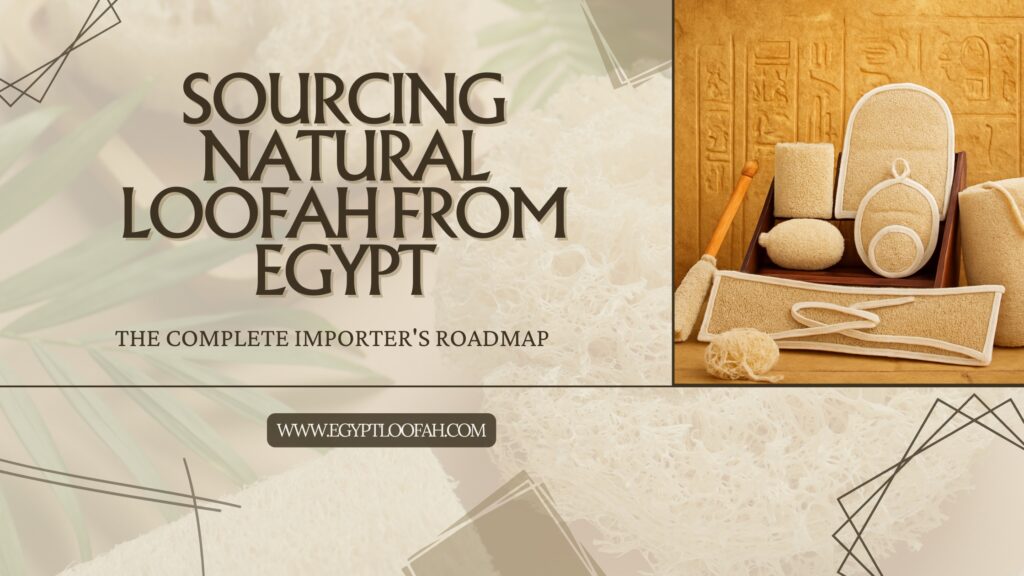
Whether you are a sourcing manager seeking reliable bulk suppliers or a conscious consumer wanting authentic natural bath products, understanding how to source loofah from Egypt is essential knowledge in 2026.
This comprehensive source loofah from Egypt guide walks you through everything from agricultural origins to final delivery. Egyptian loofah stands apart due to the Nile Delta’s unique climate, generations of farming expertise, and rigorous quality standards that other producing regions simply cannot match. For businesses, this translates to consistent product quality and competitive pricing. For individual buyers, it means superior exfoliation performance and genuine sustainability.
The Egyptian loofah industry has evolved significantly over the past decade. EGEXO has been exporting Egyptian loofah since 2015. This vertical integration benefits everyone in the supply chain by ensuring traceability, quality control, and competitive pricing whether you need a single loofah for personal use or a container shipment for your retail business.
Why Egypt Dominates Global Loofah Production
The Perfect Growing Conditions
Egypt’s agricultural advantages for loofah cultivation are unmatched anywhere in the world. The Nile Delta region provides a combination of factors that create the ideal growing environment for Luffa aegyptiaca, the plant species that produces natural loofah sponges.
The region receives approximately 300 days of sunshine annually, providing the intense light that loofah vines require for optimal fiber development. Temperatures during the growing season remain consistently between 25 and 35 degrees Celsius, which promotes rapid vine growth without the temperature swings that can damage developing gourds.
Egyptian soil composition, enriched by thousands of years of Nile sediment deposits, contains the perfect balance of nutrients for loofah cultivation.
Water management through ancient and modern irrigation systems ensures plants receive consistent moisture without the root rot problems common in regions with unpredictable rainfall. The farm to export process that leading Egyptian suppliers follow has been refined over generations.
Generational Farming Expertise
Egyptian farmers have cultivated loofah for centuries, passing down cultivation techniques from generation to generation. This accumulated knowledge cannot be replicated quickly by newer producing regions. Farmers know precisely when to plant, how to train vines for maximum yield, and the exact moment to harvest for optimal fiber quality.
This expertise extends beyond growing to processing.
The Complete Supplier Evaluation Checklist
Choosing the right Egyptian loofah supplier determines the success of your sourcing efforts. Whether you plan to purchase wholesale quantities or simply want assurance about the origin of your personal care products, evaluating suppliers properly is essential.
Supplier Assessment Criteria Table
| Evaluation Category | Questions to Ask | Red Flags | Green Flags |
|---|---|---|---|
| Experience | Years in business and export history | Less than 3 years or vague answers | Documented track record over 10 plus years |
| Vertical Integration | Own farms or third party sourcing | Cannot verify product origin | Farm ownership with traceability |
| Quality Control | Testing and inspection procedures | No documented QC process | Written standards and certifications |
| Communication | Response time and language capability | Delayed or unclear responses | Prompt professional communication |
| Flexibility | MOQ and customization options | Rigid terms only | Scalable solutions for all buyer sizes |
| Documentation | Export permits and certificates | Missing or incomplete paperwork | Full documentation readily available |
Egexo exemplifies what to look for in a quality supplier, offering complete transparency from cultivation through export. Their quality standards documentation provides the detailed specifications that professional buyers require.
Essential Questions for B2B Buyers
Business buyers should request detailed product specifications, sample shipments, and references from existing customers. Standard products are ready in 7 to 25 days from payment. Custom time is confirmed with the quote. Sea transit time is confirmed in your quote.
No minimum order on standard products. Private label from 1,000 units.
What Individual Consumers Should Verify
Individual buyers benefit from purchasing through suppliers who sell both wholesale and retail. This indicates the supplier maintains consistent quality across all order sizes. Look for detailed product photography, clear size specifications, and responsive customer service.
Verify that the supplier can explain their sourcing and processing methods. Legitimate Egyptian loofah suppliers are proud of their methods and happy to share information about cultivation and processing.
Step by Step Import Process for Egyptian Loofah
Understanding the import process helps buyers at all levels make informed decisions. This section of our source loofah from Egypt guide outlines the typical journey from initial inquiry to product delivery.
Import Process Flowchart Table
| Step | Action Required | Timeline | Tips for Success |
|---|---|---|---|
| 4 | Quotation request and negotiation | 1 week | Request quotes through proper channels like this form |
| 8 | Customs clearance | Variable | Work with experienced customs broker |
EGEXO sells wholesale to businesses.
Documentation Requirements
Successful importation requires proper documentation including commercial invoices, packing lists, certificates of origin, and phytosanitary certificates. Egyptian suppliers experienced in export handle these requirements routinely, but buyers should verify all paperwork before shipment.
Some countries require additional certifications for natural plant products. Research your country’s specific import requirements before placing orders to avoid customs delays.
Product Categories and Applications
Egyptian loofah serves diverse markets and applications. Understanding the range of available products helps both business buyers identify opportunities and consumers find products suited to their needs.
Egyptian Loofah Product Types Table
| Product Type | Primary Uses | Target Market | Key Features |
|---|---|---|---|
| Bath Body Loofah | Personal exfoliation and cleansing | Spa retailers and consumers | Gentle on skin with superior cleaning |
| Kitchen Loofah | Dish cleaning and scrubbing | Eco retailers and households | Natural alternative to plastic sponges |
| Raw Whole Loofah | Crafts and custom products | DIY enthusiasts and artisans | Unprocessed for maximum customization |
| Pet Grooming Loofah | Animal bathing and massage | Pet stores and pet owners | Safe and natural for animal skin |
| Spa Professional | Commercial spa treatments | Spa and wellness businesses | Consistent quality for professional use |
The bath and body loofah category represents the largest market segment, serving both luxury spa markets and everyday consumers seeking natural alternatives to synthetic products.
Kitchen loofahs have experienced significant growth as environmental awareness increases. These products offer a completely biodegradable alternative to plastic dish sponges, appealing to eco-conscious households and retailers alike.
The pet and spa grooming segment represents an emerging opportunity for both B2B buyers looking to differentiate their product offerings and pet owners seeking gentle natural grooming tools.
Pros and Cons of Egyptian Loofah Sourcing
Making informed sourcing decisions requires understanding both advantages and potential challenges. This balanced assessment helps set realistic expectations.
Egyptian Loofah Sourcing Analysis Table
| Aspect | Advantages | Considerations |
|---|---|---|
| Quality | Highest global standards and consistency | Premium quality commands higher prices |
| Supply Reliability | Established industry with stable production | Peak seasons may affect availability |
| Pricing | Competitive due to ideal growing conditions | Currency fluctuations can affect costs |
| Sustainability | Traditional eco-friendly farming methods | Transportation adds carbon footprint |
| Communication | Many suppliers have international experience | Time zone differences may slow response |
The advantages of sourcing from Egypt significantly outweigh the considerations for most buyers. The key is working with established suppliers who can navigate challenges effectively.
For businesses interested in developing branded products, custom loofah product design services provide access to Egyptian quality with personalized branding and specifications.
Sizing and Specifications Guide
Understanding loofah specifications ensures you order products appropriate for your intended use. Sizes, dimensions, and processing levels all affect final product performance.
Standard Loofah Dimensions Table
| Size Category | Length Range | Diameter Range | Weight Range | Common Applications |
|---|---|---|---|---|
| Small | 10 to 15 cm | 5 to 7 cm | 15 to 30 grams | Facial care and travel |
| Medium | 15 to 25 cm | 7 to 10 cm | 30 to 60 grams | Standard body use |
| Large | 25 to 35 cm | 10 to 15 cm | 60 to 100 grams | Full body and back |
| Extra Large | 35 to 50 cm | 12 to 18 cm | 100 to 150 grams | Kitchen and industrial |
| Whole Uncut | 40 to 60 cm | 10 to 15 cm | 80 to 150 grams | Processing and crafts |
These dimensions represent typical ranges.
For detailed product specifications and current availability, download the comprehensive Egexo product catalog which includes full technical details for all product lines.
Sustainability and Environmental Impact
Egyptian loofah represents one of the most sustainable personal care product options available. Understanding the environmental benefits helps both businesses communicate value to customers and consumers make informed purchasing decisions.
Natural loofah is 100 percent biodegradable, returning to the earth within months after disposal. Compare this to synthetic bath puffs and plastic sponges that persist in landfills for hundreds of years.
Egyptian cultivation methods typically rely on natural growing conditions with minimal chemical inputs. The Nile Delta’s natural fertility reduces the need for synthetic fertilizers, while traditional farming practices emphasize sustainable land management.
Water usage in Egyptian loofah farming is relatively efficient compared to many agricultural crops. The established irrigation infrastructure allows for precise water application without waste.
Business Opportunity Analysis
For B2B buyers considering Egyptian loofah sourcing, understanding market dynamics helps justify investment decisions and identify profitable opportunities.
Within this market, natural loofah products benefit from increasing consumer preference for sustainable alternatives to synthetic products.
Private label products often achieve higher margins than reselling generic products.
Entry barriers remain relatively low compared to many product categories.
FAQ Section
Q1: How do I verify that loofah products actually come from Egypt?
A: Authentic Egyptian loofah suppliers provide certificates of origin and can document their supply chain from farm to export. Look for suppliers like Egexo with owned farms and transparent sourcing practices. Genuine Egyptian loofah has distinctive quality characteristics including superior fiber density and consistent texture that experienced buyers can identify. Request documentation and consider ordering samples before large purchases to verify authenticity firsthand.
Q2: What are typical minimum order quantities when sourcing loofah from Egypt?
Many suppliers offer sample programs allowing buyers to test products before committing to full orders.
While synthetic products may seem longer lasting initially, they harbor bacteria more readily and should be replaced frequently for hygiene reasons. Natural loofah dries quickly between uses, naturally resisting bacterial growth when properly maintained.
Q4: What certifications should I look for when sourcing Egyptian loofah?
Quality focused suppliers maintain documented quality control procedures and can provide test results upon request.
Q5: Can small businesses or individuals order directly from Egyptian suppliers?
Small businesses can start with modest orders to test market response before scaling up. This flexibility makes Egyptian loofah accessible regardless of order size.
Q6: How should I store Egyptian loofah products before sale or use?
A: Store loofahs in a cool, dry location away from direct sunlight and moisture. Proper storage maintains product quality for 12 to 18 months. For retail inventory, ensure storage areas have adequate ventilation to prevent moisture accumulation. Before first use, briefly soak the loofah in warm water to restore flexibility, especially if products have been stored for extended periods.
Q7: What shipping options are available for Egyptian loofah orders?
A: Egyptian suppliers offer various shipping methods based on order size and urgency.
Expert Insight from EGEXO
The single most important advice we offer to new buyers is this: always request samples before committing to significant orders.
Quality photographs and specifications provide valuable information, but nothing replaces hands on evaluation of actual products. Test fiber density, flexibility, and uniformity. Compare products from different suppliers side by side. This investment of time and modest sample costs prevents costly mistakes and builds confidence in your sourcing decisions.
This approach helps identify which products resonate with your specific customer base before scaling production. The Egyptian loofah market offers tremendous variety, and finding your optimal product mix takes experimentation.
Consumers benefit from the same principle. Try different sizes and preparations to discover which products best suit your personal care routine. Egyptian loofah quality is consistently excellent, but individual preferences vary. To discuss an order, request a quote from EGEXO.
Conclusion
Egyptian loofah stands as the global standard for good reason. The combination of ideal growing conditions, generational farming expertise, and established export infrastructure creates a reliable supply of premium natural products that other regions cannot match. Whether you need a single loofah for personal use or container quantities for your business, Egyptian suppliers can meet your needs.
Key Takeaways:
- Sample evaluation before large orders protects both business and consumer buyers
- Established suppliers like Egexo offer complete services from raw materials to private label manufacturing
- Egyptian loofah provides sustainable, biodegradable alternatives to synthetic personal care products
Ready to experience Egyptian loofah quality?
- For Wholesale Buyers: Request a quote or request samples
- Product catalog: Download our product catalog