
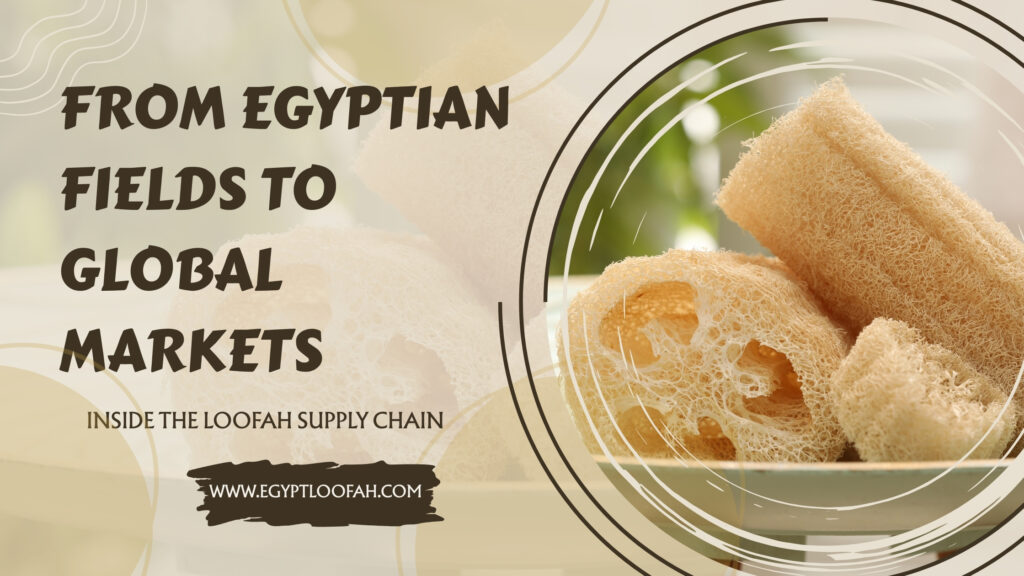
Understanding this supply chain matters whether you are sourcing thousands of units for your retail business or simply choosing a single loofah for your morning shower routine. The path a loofah takes from seed to finished product determines its quality, sustainability credentials, and overall value. Importers who understand these stages make better purchasing decisions, negotiate more effectively, and build stronger supplier relationships. Consumers who grasp the journey gain appreciation for what distinguishes a premium Egyptian loofah from mass produced alternatives.
This comprehensive guide takes you inside every stage of the Egypt loofah supply chain. You will learn how loofahs are cultivated in Egyptian soil, processed through multiple quality control checkpoints, and shipped to destinations worldwide. No minimum order on standard products. Private label from 1,000 units. Individual shoppers will understand why supply chain transparency matters for product quality and environmental responsibility.
EGEXO has been exporting Egyptian loofah since 2015. Their experience informs much of the practical guidance throughout this article.
Why Egypt Dominates the Global Loofah Supply Chain
Geographic and Climate Advantages
The Nile River Valley provides nutrient rich alluvial soil combined with consistent irrigation access. Average temperatures between 25 and 35 degrees Celsius during the growing season create ideal conditions for luffa aegyptiaca cultivation.
The country’s dry climate during harvest season allows natural sun drying without the mold risks that plague producers in more humid regions. This natural processing advantage reduces the need for artificial drying methods and preserves the loofah’s fibrous structure integrity.
Egyptian farmers have cultivated loofahs for generations, developing cultivation techniques passed down through families. This accumulated knowledge cannot be quickly replicated by newer producing regions attempting to enter the market. The combination of ideal growing conditions and generational expertise positions Egypt as the definitive source for premium natural loofahs.
Production Scale and Infrastructure
This production volume supports a mature export infrastructure including specialized processing facilities, quality testing laboratories, and logistics networks optimized for agricultural products.
The concentration of production creates efficiency advantages throughout the supply chain. Processing facilities operate at scale, reducing per unit costs. Export logistics benefit from established shipping routes and customs procedures.
For wholesale buyers, this mature infrastructure means reliable supply, consistent quality, and competitive pricing. For consumers, it translates to product availability and confidence that purchased loofahs come from established, accountable sources. Learn more about why choosing Egexo as your supplier provides these advantages.
The Seven Stages of the Egypt Loofah Supply Chain
The complete journey from field to finished product typically spans 8 to 14 months.
Stage 1: Seed Selection and Planting
The supply chain begins with seed selection during February and March. Egyptian farmers select seeds from the previous season’s highest quality gourds, preserving genetic characteristics that produce dense, uniform fiber structures.
Planting occurs in prepared fields with proper drainage and irrigation access. Farmers space plants approximately 2 meters apart to allow adequate vine growth. The luffa plant is a vigorous climber requiring trellising or ground space for vine expansion.
Stage 2: Cultivation and Growing Season
The growing season extends from April through September. During this period, plants require consistent irrigation, pest management, and careful monitoring. Flowers appear approximately 60 days after planting, followed by fruit development over the subsequent 2 to 3 months.
Quality conscious growers thin excess fruit to direct plant energy toward fewer, higher quality gourds. This practice reduces overall yield but dramatically improves fiber density and structural integrity in the harvested loofahs.
Stage 3: Harvest and Initial Processing
Harvest timing critically affects final product quality. Loofahs harvested too early lack developed fiber structure. Those harvested too late become overly stiff and less suitable for skin contact applications.
Experienced farmers harvest when the gourd skin begins yellowing and the fruit feels light relative to its size, indicating moisture reduction and fiber maturation. Initial processing involves removing the outer skin through water soaking or mechanical peeling, followed by seed removal and preliminary cleaning.
Quality Control Throughout the Egypt Loofah Supply Chain
Quality Checkpoints in Processing
Reputable suppliers implement quality verification at multiple points throughout processing. These checkpoints catch defects early and prevent substandard products from reaching later stages.
Initial inspection occurs immediately after harvest, removing damaged or diseased gourds before processing resources are invested. Secondary inspection follows peeling and cleaning, evaluating fiber structure and identifying any hidden damage.
For detailed information about quality verification processes, review the Egexo quality standards documentation. Wholesale buyers can request samples to evaluate quality firsthand before committing to larger orders.
Import and Export Logistics in the Egypt Loofah Supply Chain
Documentation and Compliance Requirements
International loofah trade requires specific documentation for customs clearance and regulatory compliance. Understanding these requirements prevents shipping delays and unexpected costs.
Phytosanitary certificates confirm that agricultural products meet plant health standards and are free from pests or diseases. Egyptian authorities issue these certificates following inspection of export shipments.
Certificate of Origin documentation verifies Egyptian production, which matters for trade agreements and tariff calculations. Commercial invoices must accurately describe products, quantities, and values for customs valuation purposes.
Import regulations vary by destination country. European Union imports require compliance with REACH regulations and may require additional testing documentation. Experienced suppliers handle these documentation requirements routinely.
Shipping and Logistics Considerations
Most Egyptian loofah exports ship via sea freight from Alexandria or Port Said to major destination ports worldwide.
Standard products are ready in 7 to 25 days from payment. Custom time is confirmed with the quote. Sea transit time is confirmed in your quote. Standard export packaging uses breathable materials with moisture barriers for outer protection.
Smaller buyers often work through distributors or consolidated shipments. Request a wholesale quotation to discuss specific quantity requirements and logistics arrangements.
Evaluating Suppliers Within the Egypt Loofah Supply Chain
Key Criteria for Wholesale Buyers
Selecting the right supplier within the Egypt loofah supply chain requires systematic evaluation across multiple dimensions. Price alone provides insufficient basis for supplier selection when quality consistency and reliability matter.
Production capacity verification ensures suppliers can fulfill order volumes without quality degradation. Request information about farm partnerships, processing facility capacity, and historical order fulfillment rates.
Quality management systems indicate supplier commitment to consistent standards.
Communication responsiveness reveals how suppliers handle ongoing business relationships. Evaluate response times during initial inquiries, clarity of quotations, and willingness to provide detailed product specifications.
Export experience matters significantly for international buyers. Established exporters understand documentation requirements, shipping logistics, and customs procedures. They anticipate potential issues and handle complications efficiently.
| Evaluation Criterion | Key Questions | Red Flags |
|---|---|---|
| Production Capacity | Annual volume, farm partnerships, facility size | Vague answers, unwillingness to share details |
| Export Experience | Years exporting, destination markets, reference clients | New to export, unfamiliar with documentation |
| Communication | Response time, language capability, technical knowledge | Slow responses, unclear specifications |
| Flexibility | MOQ options, custom processing, private labeling | Rigid terms, no customization available |
Supplier Selection Checklist
Use this checklist when evaluating potential suppliers within the Egypt loofah supply chain.
Verify physical facility existence through video calls, photos, or site visits. Confirm the supplier actually processes loofahs rather than simply trading products from undisclosed sources.
Request and verify references from current customers in your market region. Speaking with existing buyers provides insight into actual performance versus marketing claims.
Obtain samples before committing to production orders. The sample request process at Egexo demonstrates how professional suppliers facilitate this evaluation.
Review contract terms including payment schedules, quality guarantees, and dispute resolution procedures. Established suppliers offer reasonable terms that protect both parties.
Discuss customization capabilities if your business requires specific sizes, shapes, or private label packaging. The private label manufacturing and custom product design services demonstrate supplier capabilities in this area.
Consumer Benefits of Supply Chain Transparency
How Supply Chain Knowledge Improves Purchasing Decisions
Understanding the Egypt loofah supply chain empowers consumers to make better purchasing decisions. This knowledge helps distinguish genuine quality from marketing claims and supports values aligned purchasing.
Traceability indicates quality commitment. Brands and retailers who can explain their supply chain demonstrate accountability that anonymous products cannot match. Ask where loofahs come from and how they are processed.
Processing method affects product performance. Our standard loofah is not bleached. Bleaching is done only on request. Natural processing preserves the characteristic cream to tan coloration of quality Egyptian loofahs.
Supply chain length impacts freshness. Direct supply relationships deliver fresher products with better preserved structural quality.
Sustainability Considerations
The Egypt loofah supply chain offers significant environmental advantages over synthetic alternatives. Understanding these benefits helps environmentally conscious consumers align purchases with values.
Natural loofahs are fully biodegradable, decomposing within weeks in composting conditions.
Egyptian loofah cultivation requires minimal chemical inputs compared to industrial agriculture. Many farms use traditional cultivation methods with limited pesticide application.
Water efficiency in Egyptian loofah production benefits from established irrigation infrastructure and the crop’s relatively modest water requirements. The Nile Valley’s irrigation systems have supported agriculture for millennia.
Browse the body loofah collection to explore sustainably sourced options for personal care applications.
Product Categories Within the Egypt Loofah Supply Chain
Understanding Different Loofah Product Types
The Egypt loofah supply chain produces multiple product categories serving different applications. Understanding these categories helps buyers specify requirements accurately and helps consumers select appropriate products.
Raw or whole loofahs represent minimally processed products retaining their natural cylindrical shape. These products appeal to DIY enthusiasts, craft suppliers, and buyers who prefer to cut and shape products themselves. The raw loofah scrubbers category showcases these options.
Body and bath loofahs undergo additional processing including cutting to size, edge finishing, and sometimes attachment of handles or straps. These consumer ready products dominate retail channels.
Their coarser texture provides effective scrubbing power for dishwashing and surface cleaning.
Specialty products including pet grooming loofahs, spa treatment tools, and decorative items represent growing market segments. The pet and spa loofah category addresses these specialized applications.
| Product Category | Typical Processing | Primary Markets | Key Buyer Considerations |
|---|---|---|---|
| Raw Whole Loofahs | Minimal, cleaned only | Crafters, DIY, wholesale | Storage space, further processing required |
| Kitchen Loofahs | Cut, minimal finishing | Retail, foodservice | Durability, scrubbing effectiveness |
| Pet Grooming | Shaped for animal use | Pet retail, groomers | Safety, appropriate texture |
| Craft and Decor | Varied processing | Craft suppliers, decorators | Shape integrity, visual appeal |
Future Trends in the Egypt Loofah Supply Chain
Market Growth and Evolution
The global natural loofah market continues expanding as consumers increasingly reject synthetic alternatives. This growth creates opportunities throughout the Egypt loofah supply chain while driving evolution in production and processing methods.
Sustainability certification demand is accelerating. Buyers across market segments increasingly require documented environmental credentials.
Customization expectations are rising. Retailers and brand owners seek distinctive products rather than commodity offerings. This trend favors suppliers capable of custom sizing, shaping, and private label packaging.
Quality standards are tightening. As the market matures, minimum acceptable quality levels are rising.
Download the complete Egexo product catalog to explore current product offerings and specifications.
Technology Integration
Technology is gradually transforming traditional supply chain operations. While loofah cultivation remains fundamentally agricultural, supporting systems are modernizing.
Inventory and order management systems enable faster response times and more accurate delivery commitments. Quality documentation increasingly uses digital formats with photo verification and tracking capabilities.
Communication technologies connect international buyers directly with Egyptian suppliers, reducing dependence on intermediaries. Video facility tours and real time communication build trust relationships previously requiring expensive travel.
FAQ Section
Q1: How long does the Egypt loofah supply chain take from harvest to delivery?
A: The complete Egypt loofah supply chain typically spans 8 to 14 months from planting to final delivery. The growing season alone requires 5 to 6 months. Buyers should plan orders several months ahead for new production lots.
Q2: What minimum order quantities apply for direct import from Egypt?
Some suppliers offer lower minimums through consolidated shipments or distributor arrangements.
Q3: How can consumers verify their loofah comes from Egypt?
A: Consumers can verify Egyptian origin by checking product packaging for country of origin labeling, which is legally required in most markets. Reputable brands provide supply chain transparency information on websites or upon request. Egyptian loofahs typically display characteristic cream to tan coloration and dense fiber structure distinguishing them from Asian produced alternatives.
Q4: What certifications should wholesale buyers request from Egyptian suppliers?
Established suppliers maintain these certifications routinely.
Q5: How does Egyptian loofah quality compare to other producing countries?
A: Egyptian loofahs are widely considered the global quality benchmark due to ideal growing conditions, generational cultivation expertise, and mature quality infrastructure.
Replacing loofahs regularly maintains hygiene and exfoliation effectiveness.
Q7: How should buyers evaluate suppliers within the Egypt loofah supply chain?
A: Buyers should evaluate suppliers based on production capacity documentation, quality management systems, export experience and references, communication responsiveness, and customization capabilities. Request facility verification, customer references, and product samples before committing to orders. Established suppliers welcome thorough evaluation processes.
Expert Insight from EGEXO
The single most important factor determining loofah quality is harvest timing. Rushing harvest to meet demand or delaying harvest for size maximization both compromise quality. This is why we maintain direct relationships with experienced farmers who understand these nuances rather than purchasing opportunistically from variable sources.
For wholesale buyers, we recommend establishing relationships with suppliers who can explain their cultivation partnerships and quality control processes in detail. Vague answers about sourcing indicate supply chain opacity that typically correlates with quality inconsistency.
For consumers, look for products from brands that provide origin transparency and maintain consistent quality over time. To discuss an order, request a quote from EGEXO.
Conclusion
The Egypt loofah supply chain represents a sophisticated system connecting traditional agriculture with global commerce.
For wholesale buyers, supply chain knowledge enables informed supplier selection, accurate specification development, and realistic logistics planning. Recognizing quality indicators and understanding documentation requirements prevents costly mistakes and builds sustainable sourcing relationships.
For consumers, appreciating supply chain complexity enhances product selection and supports values aligned purchasing. Knowing where products come from and how they are processed connects everyday purchases with broader sustainability and quality considerations.
Egyptian loofahs maintain their reputation as the global quality standard because the supply chain supporting them has developed over generations. This accumulated expertise, combined with ideal growing conditions, creates products that synthetic alternatives and newer producing regions cannot match.
Key Takeaways:
- The Egypt loofah supply chain spans 8 to 14 months from planting to delivery
- Supplier evaluation requires verification of capacity, quality systems, and export experience
- Egyptian loofahs offer environmental advantages over synthetic alternatives
Ready to experience Egyptian loofah quality?
- For Wholesale Buyers: Request a quote or request samples
- Product catalog: Download our product catalog