
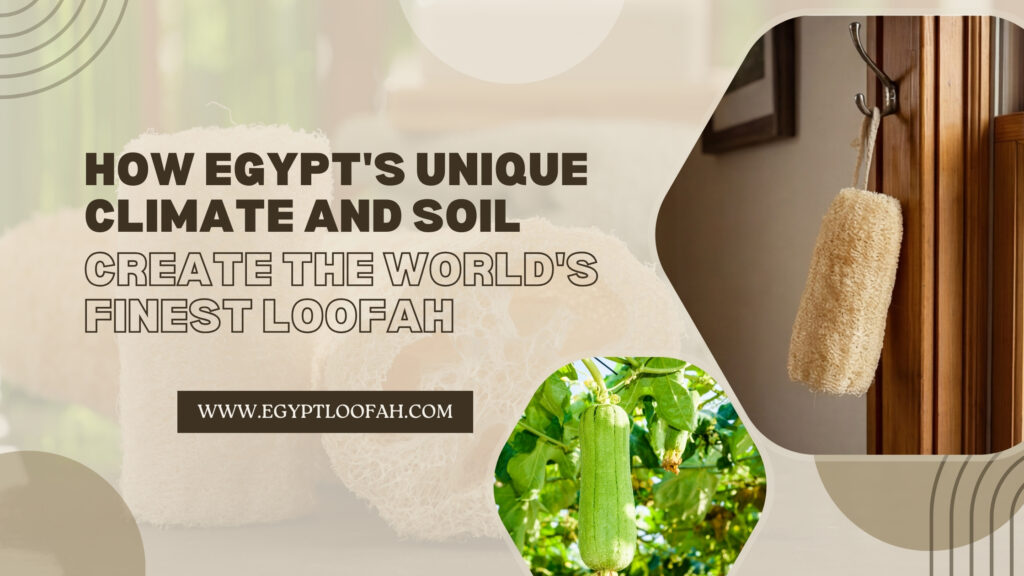
What makes Egyptian loofahs consistently outperform those grown anywhere else on the planet? The answer lies in a remarkable combination of environmental factors that cannot be artificially replicated. Egyptian climate loofah quality results from thousands of years of geological development, specific atmospheric conditions, and agricultural expertise that has been refined across generations.
For wholesale buyers and importers seeking reliable product sourcing, understanding these environmental advantages provides crucial insight into quality assessment and supplier evaluation. The connection between Egyptian growing conditions and final product performance directly impacts your inventory quality, customer satisfaction rates, and ultimately your bottom line.
The loofah in your shower represents the culmination of specific environmental conditions that determine every aspect of its performance.
This comprehensive guide examines the precise climate and soil factors that establish Egypt as the global leader in premium loofah production. You will learn how temperature patterns, humidity levels, Nile River irrigation, and mineral rich soil combine to create fibers with superior density, flexibility, and durability. Whether you are sourcing containers for international distribution or selecting your next personal care product, this information will transform your approach to loofah evaluation.
EGEXO has been exporting Egyptian loofah since 2015. Their quality standards reflect this accumulated knowledge.
The Science Behind Egyptian Climate Loofah Quality
Temperature Patterns and Fiber Development
Egypt’s temperature profile creates ideal conditions for Luffa aegyptiaca cultivation. Summer temperatures in the primary growing regions consistently range between 35 and 42 degrees Celsius during peak daylight hours. This intense heat drives rapid photosynthesis and vigorous vine growth during the critical development period.
Night temperatures drop significantly, typically falling to 20 to 25 degrees Celsius. This daily temperature differential triggers specific plant responses that strengthen fiber structure. The cooling period allows the plant to consolidate daytime growth and develop the dense cellular networks that characterize premium loofahs.
The extended growing season from March through October provides approximately 200 days of optimal conditions. This duration allows loofahs to reach full maturity without the time pressure experienced in regions with shorter growing windows. Rushed harvest produces inferior fibers with less developed structure.
Humidity and Natural Drying Advantages
This remarkably low humidity creates advantages at every stage of production, from growing through harvest to final processing.
During cultivation, low humidity reduces fungal disease pressure that plagues loofah farms in tropical climates. Egyptian farmers apply minimal fungicides because the environment naturally suppresses pathogen development. This results in cleaner products with fewer chemical residues.
The harvest and drying phases benefit most dramatically from Egyptian humidity levels. Loofahs dry naturally on the vine and during post harvest processing without developing the mold issues common in humid production regions. Natural sun drying preserves fiber integrity better than artificial drying methods required elsewhere.
For wholesale buyers, this translates to lower rejection rates and more consistent quality across shipments. Consumers benefit from products free of musty odors and hidden mold contamination that can affect health.
Rainfall Patterns and Controlled Irrigation
Annual rainfall in Egyptian loofah growing regions averages less than 25 millimeters. This near absence of rain might seem problematic, but it actually provides crucial advantages. Farmers control every drop of water their crops receive through sophisticated irrigation systems fed by the Nile River.
Controlled irrigation allows precise management of soil moisture throughout the growing season. Farmers can stress plants at specific growth stages to trigger fiber strengthening responses, then restore optimal moisture for continued development. This level of control proves impossible in rain fed agriculture.
The lack of rainfall also eliminates the damage that heavy rain causes to maturing loofah gourds. Tropical storms in Asian growing regions frequently destroy crops or cause water logging that promotes rot. Egyptian loofahs develop without this weather risk.
Learn more about how these environmental advantages translate through the entire farm to export process.
Nile Valley Soil Composition and Mineral Content
Alluvial Soil Characteristics
The Nile River has deposited nutrient rich sediment across Egyptian farmland for thousands of years. This alluvial soil provides the foundation for superior loofah cultivation. The annual flood cycle historically renewed soil fertility, and modern irrigation continues to deliver mineral laden water to crops.
Alluvial soil in the primary growing regions contains ideal proportions of sand, silt, and clay. This balanced texture provides excellent drainage while retaining sufficient moisture for plant needs. Loofah roots develop extensive networks in this friable soil, accessing nutrients across a broad area.
The result is vigorous growth without excessive synthetic fertilizer application.
Essential Mineral Availability
Egyptian soil contains elevated levels of minerals essential for fiber development. Calcium, magnesium, and potassium occur naturally at concentrations that support optimal plant growth. These minerals directly influence the structural compounds that give loofah fibers their characteristic strength.
Calcium plays a particularly important role in cell wall formation. This mineral density contributes to the firmness and durability that distinguish Egyptian products.
Trace elements including zinc, manganese, and boron occur in balanced proportions that support enzyme functions throughout plant development. Deficiencies in any of these elements produce weaker fibers with reduced performance characteristics.
Soil pH and Nutrient Uptake
Soil pH in Egyptian growing regions typically ranges from 7.0 to 8.2, creating slightly alkaline conditions. This pH range optimizes availability of most essential nutrients while limiting uptake of potentially harmful elements.
Loofah plants thrive in this pH range, developing healthy root systems that efficiently extract available nutrients. The alkaline conditions also suppress certain soil borne pathogens that attack loofah roots in more acidic environments.
Farmers can fine tune soil pH through irrigation management and targeted amendments when necessary. This control allows optimization for specific quality outcomes that buyers and consumers value.
| Soil Factor | Egyptian Growing Regions | Typical Tropical Regions | Impact on Quality |
|---|---|---|---|
| Soil Type | Alluvial loam | Variable clay or sand | Better root development |
| Calcium Content | High natural levels | Often deficient | Stronger fiber structure |
| Drainage | Excellent | Often poor | Reduced root disease |
| pH Range | 7.0 to 8.2 | 5.5 to 7.0 typical | Optimal nutrient uptake |
| Salinity | Low to moderate | Variable | Controlled stress response |
How Egyptian Climate Loofah Quality Affects Product Performance
Fiber Density and Exfoliation Effectiveness
The environmental factors described above combine to produce loofah fibers with exceptional density. This density directly determines exfoliation effectiveness.
Users report that Egyptian loofahs achieve better exfoliation results while feeling gentler on the skin. The fiber structure provides effective scrubbing without the harshness of inferior products.
For spa and skincare professionals, this performance difference matters significantly. Treatments using Egyptian loofahs produce visible results that clients notice and appreciate. The body loofah collection showcases products optimized for professional and personal skincare applications.
Durability and Product Lifespan
The dense fiber structure resists breakdown from repeated use, water exposure, and natural degradation.
This durability advantage creates value for all users. Consumers replace products less frequently, reducing long term costs despite potentially higher initial prices. Wholesale buyers experience fewer customer complaints about premature product failure.
The fiber integrity also maintains performance consistency throughout product life. Egyptian loofahs exfoliate effectively until the end of their useful life rather than degrading rapidly after initial use. This reliability builds customer loyalty and repeat purchasing.
Water Absorption and Lather Production
Fiber structure influences how loofahs interact with water and soap products. Egyptian loofahs absorb water efficiently while maintaining their structural form. The balanced porosity creates ideal conditions for lather development when combined with soap or body wash.
Users require less product to achieve rich lather compared to synthetic alternatives or lower quality natural loofahs. This efficiency appeals to both cost conscious consumers and environmentally minded users seeking to reduce product consumption.
The water release characteristics also support effective rinsing after use. Egyptian loofahs drain quickly, reducing bacterial growth potential between uses. This hygiene advantage matters for consumers concerned about bathroom product safety.
| Performance Metric | Premium Egyptian | Standard Asian Import | Synthetic Alternative |
|---|---|---|---|
| Fiber Density | High | Medium | Not applicable |
| Exfoliation Level | Medium to firm | Variable soft to medium | Light to medium |
| Lather Production | Excellent | Good | Fair |
| Drying Speed | Fast | Moderate | Fast |
| Bacterial Resistance | Good with care | Moderate | Good |
Sustainable Advantages of Egyptian Loofah Cultivation
Water Efficiency in Arid Climate
Egyptian loofah farming demonstrates remarkable water efficiency despite operating in one of the world’s driest climates. Modern drip irrigation systems deliver water directly to plant roots, minimizing evaporation and runoff losses.
The Nile River provides a renewable water source that has sustained Egyptian agriculture for millennia. Contemporary water management protects this resource while maintaining agricultural productivity. Loofah cultivation uses significantly less water per hectare than many alternative crops grown in the region.
For environmentally conscious buyers and consumers, this water efficiency adds value beyond product performance. Supporting Egyptian loofah production means supporting water responsible agriculture in a water scarce region.
Minimal Chemical Input Requirements
The Egyptian climate naturally suppresses many pests and diseases that require chemical control elsewhere. Fungal pathogens that devastate tropical loofah crops rarely survive in Egyptian humidity conditions. Insect pressure remains manageable through integrated pest management rather than intensive spraying.
Most Egyptian loofah farms operate with minimal synthetic pesticide and fungicide applications. The resulting products contain fewer chemical residues than those grown in humid climates requiring frequent treatments. This cleaner production appeals to health conscious consumers and retailers emphasizing natural products.
Learn more about sourcing options through private label services.
Carbon Footprint Considerations
Natural loofah production generates minimal carbon emissions compared to synthetic scrubber manufacturing. The plants sequester carbon during growth, and processing requires limited energy input. Sun drying replaces mechanical drying, and minimal packaging reduces transportation emissions.
Egyptian proximity to European and Middle Eastern markets provides shipping advantages for buyers in these regions. Shorter shipping distances compared to Asian alternatives reduce transportation related emissions for many destination markets.
The complete biodegradability of natural loofahs eliminates end of life disposal concerns. Unlike synthetic scrubbers that persist in landfills or oceans, Egyptian loofahs return nutrients to soil when composted. Wholesale buyers can explore the full raw loofah selection for sustainably sourced options.
Sourcing Premium Egyptian Loofahs
Supplier Evaluation Checklist
Selecting the right supplier ensures access to the quality advantages that Egyptian climate creates. Use this checklist when evaluating potential sources for wholesale purchasing.
| Evaluation Criterion | What to Verify | Why It Matters |
|---|---|---|
| Regional Sourcing | Confirm specific Egyptian growing regions | Different regions produce different quality profiles |
| Processing Facilities | Verify modern processing capabilities | Affects final product cleanliness and presentation |
| Export Experience | Check export history and documentation capabilities | Reduces customs delays and compliance issues |
| Sample Availability | Request samples before large orders | Allows quality verification before commitment |
| Communication | Assess responsiveness and language capabilities | Supports smooth business relationship |
| References | Request customer references or reviews | Confirms reliability from actual buyers |
Working with Egexo
Their integrated approach ensures quality control from farm to delivery, preserving the environmental advantages throughout the supply chain.
The company maintains relationships across all major Egyptian growing regions, allowing specification of regional origin for buyers with particular quality requirements.
Request a wholesale quotation to begin the sourcing process. Their export team provides guidance on order specifications, shipping logistics, and documentation requirements.
Consumer Shopping Guidance
The Egexo Products page offers direct access to authentic Egyptian products with full quality transparency.
Consider your intended use when selecting products.
FAQ Section
Q1: How does Egyptian climate loofah quality compare to loofahs from China or India?
A: Egyptian climate loofah quality exceeds Asian alternatives due to unique environmental factors. The combination of Nile Valley soil minerals and controlled irrigation creates fiber characteristics that other regions cannot replicate.
Q3: How can consumers identify authentic Egyptian loofahs?
A: Authentic Egyptian loofahs display cream to light tan natural coloring with dense, evenly distributed fibers. They feel heavier than similar sized alternatives and flex without cracking. Ask retailers about origin verification and look for supplier information indicating Egyptian sourcing. Reputable sellers can provide origin documentation upon request.
Q4: What minimum order quantities apply for Egyptian loofah imports?
No minimum order on standard products. Private label from 1,000 units.
Q5: How should Egyptian loofahs be stored to maintain quality?
A: Store loofahs in cool, dry conditions away from direct sunlight to preserve fiber integrity.
Q6: Do Egyptian climate conditions affect loofah availability throughout the year?
A: Harvest occurs from August through November, with fresh product most available from September through February. Quality remains consistent year round when properly stored. Wholesale buyers should plan procurement around harvest timing for maximum freshness. Off season orders draw from warehoused inventory that maintains quality under proper storage conditions.
Q7: Can I get custom products made from Egyptian loofahs?
A: Yes, Egyptian loofah manufacturers offer extensive customization options. Custom shapes, sizes, and product combinations accommodate specific market requirements. Private label manufacturing allows buyers to develop branded product lines using premium Egyptian materials. Explore custom design services for specialized product development.
A: Premium Egyptian loofahs suit most skin types when used appropriately. The natural fiber structure provides effective exfoliation without synthetic chemicals or harsh additives. Natural loofahs generally cause fewer reactions than synthetic alternatives.
Expert Insight from EGEXO
Harvest too early and fibers lack full density. Harvest too late and fibers become brittle.
Our farm partnerships emphasize harvest timing expertise as much as growing conditions. We work with cultivation families who have developed this timing knowledge across generations. They recognize maturity indicators that inexperienced growers miss.
For wholesale buyers, we recommend requesting harvest date information for shipments. Fresh harvest product from September through December represents peak quality. For consumers, purchase from suppliers who can discuss their sourcing relationships and quality verification processes. The connection between Egyptian environmental advantages and your final product depends on expertise at every supply chain stage.
Learn more about why choosing Egexo provides access to this expertise and consistent quality. To discuss an order, request a quote from EGEXO.
Conclusion
Egyptian climate loofah quality represents the convergence of unique environmental factors that no other growing region can replicate. The combination of ideal temperature patterns, low humidity, mineral rich Nile Valley soil, and controlled irrigation creates loofahs with superior fiber density, durability, and performance characteristics.
Wholesale buyers can evaluate suppliers based on their connection to premium growing conditions and quality preservation throughout the supply chain. Consumers can appreciate why Egyptian origin indicates superior product quality and make informed purchasing choices.
The sustainability advantages of Egyptian cultivation add further value. Water efficient farming, minimal chemical inputs, and biodegradable end products align with growing market demand for environmentally responsible options.
Key Takeaways:
- Low humidity enables natural drying without mold issues common in Asian production
- Nile Valley soil provides mineral content essential for strong fiber development
- Sustainable production practices support environmental responsibility goals
Ready to experience Egyptian loofah quality?
- For Wholesale Buyers: Request a quote or request samples
- Product catalog: Download our product catalog