
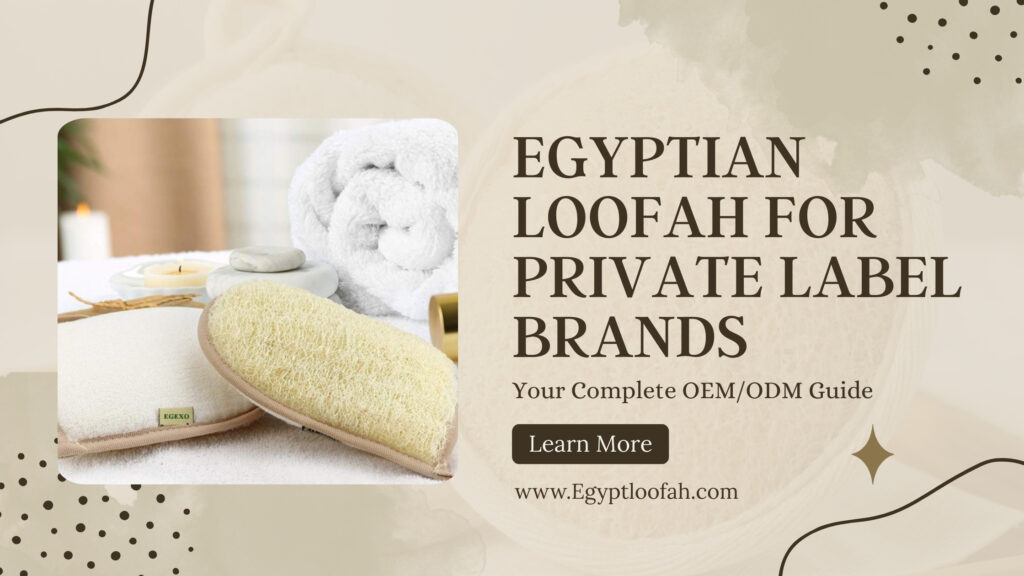
Egyptian loofah private label opportunities represent one of the most accessible entry points into this thriving market segment. Whether you are a retailer looking to launch your own branded product line or a consumer curious about what goes into the private label products you purchase, understanding this manufacturing process reveals important insights about quality, sustainability, and value.
Private label manufacturing allows businesses to sell premium Egyptian loofahs under their own brand names without building farming or production infrastructure. This model has transformed how specialty bath products reach consumers worldwide. For individual shoppers, recognizing private label dynamics helps identify truly premium products versus repackaged commodity goods.
The combination of ideal growing conditions along the Nile Delta and generations of cultivation expertise creates raw materials that manufacturers worldwide seek for their branded products. EGEXO has been exporting Egyptian loofah since 2015.
This guide covers everything from initial concept development through finished product delivery. No minimum order on standard products. Private label from 1,000 units. Business buyers will find actionable frameworks for supplier evaluation and product development, while consumers will gain appreciation for the craftsmanship behind quality natural bath products.
Ready to explore private label possibilities? Request samples to evaluate quality before committing to larger orders.
Understanding Egyptian Loofah Private Label Manufacturing
What Makes Egyptian Loofahs Ideal for Private Label Products
Egyptian loofahs possess characteristics that make them particularly suitable for branded product development. The fiber density achieved through Nile Valley cultivation creates exfoliation performance that distinguishes premium products from generic alternatives. Private label buyers choosing Egyptian sourcing gain immediate quality differentiation in crowded marketplaces.
The natural cream to golden coloration of properly processed Egyptian loofahs photographs beautifully for marketing materials. This aesthetic advantage matters significantly for brands building visual identity around their bath product lines. Consumers respond positively to the natural appearance that signals authenticity and quality.
Consistency represents another critical advantage. This reliability allows brands to promise consistent quality to their customers without worrying about shipment variations undermining their reputation.
The sustainability narrative surrounding Egyptian loofah cultivation resonates strongly with contemporary consumers. Brands can authentically communicate environmental responsibility because Egyptian production genuinely requires fewer chemical inputs and water resources than alternatives grown elsewhere.
OEM vs ODM Manufacturing Models Explained
Original Equipment Manufacturing and Original Design Manufacturing represent two distinct approaches to Egyptian loofah private label production. Understanding the differences helps buyers choose the model that matches their business needs and capabilities.
OEM manufacturing means the buyer provides complete product specifications and the manufacturer produces exactly to those requirements. This model suits brands with established product visions and design capabilities. You control every aspect from dimensions and processing methods to packaging specifications.
ODM manufacturing means the manufacturer offers existing product designs that buyers can brand with their own labels. This model reduces development time and upfront costs because design work is already complete. Standard products are ready in 7 to 25 days from payment. Custom time is confirmed with the quote. Sea transit time is confirmed in your quote.
| Factor | OEM Manufacturing | ODM Manufacturing |
|---|---|---|
| Design Control | Complete buyer control | Manufacturer designs available |
| Minimum Investment | Higher initial costs | Lower entry barrier |
| Product Uniqueness | Fully custom products | Shared designs possible |
| Best For | Established brands | New market entrants |
| Flexibility | Maximum customization | Limited modifications |
Egexo offers both pathways through their private label loofah manufacturing and custom loofah product design services.
The Egyptian Loofah Private Label Development Process
Step by Step Journey from Concept to Product
Successful private label development follows a structured process that minimizes risks while maximizing product quality. Understanding each stage helps buyers plan realistic timelines and budgets while giving consumers insight into the care behind premium branded products.
Stage 1: Initial Consultation and Requirements Definition
The process begins with detailed discussions about your brand positioning, target market, and product vision. During this phase, you identify which product categories align with your business goals. Are you targeting luxury spa markets, eco conscious consumers, or value oriented retailers? These decisions shape every subsequent choice.
Stage 2: Sample Development and Evaluation
Manufacturers create prototype products matching your specifications. For OEM projects, this may involve multiple revision cycles. ODM buyers receive existing samples for evaluation.
Stage 3: Quality Approval and Specifications Finalization
Once samples meet your standards, you formalize exact specifications in writing. This documentation becomes the quality reference for production runs.
Stage 4: Production Planning and Scheduling
With specifications approved, production slots are scheduled based on raw material availability and manufacturing capacity.
Stage 5: Manufacturing and Quality Control
Production proceeds according to approved specifications. Reputable manufacturers implement quality checkpoints throughout processing. Egexo maintains rigorous quality standards that ensure consistency across batches.
Stage 6: Packaging and Labeling
Finished loofahs receive your branded packaging. Options range from simple hang tags to fully custom retail ready presentations. Packaging decisions significantly impact perceived value and retail pricing potential.
Stage 7: Export Documentation and Shipping
Completed orders require proper export documentation for international shipment. Experienced suppliers handle customs paperwork and coordinate logistics to your destination.
Customization Options for Egyptian Loofah Private Label Products
The range of customization possibilities allows brands to create truly distinctive products. Egyptian loofah private label manufacturing supports modifications across multiple dimensions.
Shape and Size Variations
Standard loofah products come in established sizes, but custom cutting creates unique shapes. Oval, rectangular, round, and specialty silhouettes differentiate your products visually. Body size loofahs typically range from 10 to 30 centimeters in length, while facial products measure 5 to 8 centimeters.
Processing Intensity
Fiber softness varies based on processing methods. Some markets prefer firmer exfoliation while others want gentler textures. Specify your target softness level and manufacturers adjust accordingly.
Product Combinations
Combining loofahs with other materials creates unique hybrid products. Popular combinations include loofah with cotton straps, wooden handles, or natural bristle backs. The body loofah category showcases various combination possibilities.
Packaging Design
From minimalist kraft paper wrapping to premium gift boxes, packaging options accommodate every brand positioning. Consider your retail environment and price point when selecting packaging complexity.
Business Considerations for Egyptian Loofah Private Label Ventures
Minimum Order Quantities and Investment Planning
Egyptian loofah private label projects require balancing order size against capital constraints and storage capacity.
First time buyers should consider starting with smaller ODM orders to test market response before investing in custom development. This approach reduces risk while generating real sales data to inform future product decisions.
Request a wholesale quotation to receive specific pricing based on your requirements.
Profit Margin Potential in Private Label Loofah Products
Private label Egyptian loofahs offer attractive margin potential when positioned correctly. Understanding typical markup structures helps buyers plan pricing strategies.
Retail markups of 3x to 5x wholesale cost remain standard for specialty bath products. Premium positioning with luxury packaging supports higher multipliers while value positioning requires volume to compensate for tighter margins.
The key to margin optimization lies in product differentiation. Generic loofahs compete primarily on price, compressing margins for all sellers. Brands that communicate Egyptian origin, sustainability credentials, and quality specifications can command premium pricing that supports healthy profitability.
Spa and wellness retailers often achieve the strongest margins because their customers prioritize quality over price. E commerce brands benefit from direct consumer relationships that eliminate distributor markup sharing. Traditional retail distribution requires careful margin calculation to ensure profitability after retailer cuts.
Product Categories for Egyptian Loofah Private Label Development
Body and Bath Loofah Options
The body care segment represents the largest market for Egyptian loofah private label products. Multiple product formats serve different consumer preferences and use cases.
Full body loofahs in natural cylindrical form appeal to consumers seeking authentic natural products. These require minimal processing, keeping costs manageable while delivering genuine Egyptian quality. Sliced body pads offer convenience for shower use and photograph well for retail packaging.
Back scrubbers combining loofah surfaces with fabric straps address specific consumer needs. These combination products command premium pricing due to added materials and assembly complexity. Explore the complete body loofah selection for product inspiration.
Facial exfoliation discs require finer processing for gentler skin contact. This category serves skincare brands expanding into natural exfoliation tools. Smaller sizes reduce material costs while supporting premium pricing per unit.
Kitchen and Household Cleaning Products
Sustainable household products represent a growing category for Egyptian loofah private label development. Consumers increasingly reject synthetic sponges in favor of biodegradable alternatives.
Kitchen scrubbers cut from raw loofah serve dish cleaning and surface scrubbing needs. These products emphasize durability and cleaning effectiveness over cosmetic appearance. The kitchen loofah category demonstrates various formats serving household applications.
Multi pack configurations suit this market segment because kitchen products require regular replacement. Subscription models work well for household loofah products due to predictable replenishment cycles.
Specialty and Niche Applications
Beyond standard body and kitchen applications, Egyptian loofahs serve numerous specialty markets worth exploring.
Pet grooming products leverage loofah textures for coat cleaning and massage. Review pet and spa grooming options for this category.
Spa and professional treatments use larger format loofahs for body treatments.
Craft and DIY markets purchase raw loofah scrubbers for creative projects. Some buyers add value through assembly into unique finished products.
Why Consumers Should Care About Private Label Quality
How to Identify Quality Private Label Loofah Products
Not all private label loofahs represent equal quality, and informed shopping leads to better purchases.
Check product labeling for origin information. Brands confidently stating Egyptian origin likely source premium materials. Vague descriptions avoiding specific sourcing often indicate lower quality alternatives.
Examine physical characteristics before purchase when possible. Dense, cream colored loofahs with uniform texture indicate quality raw materials and proper processing. Lightweight, discolored, or uneven products suggest inferior sourcing or handling.
Research the brand behind the label. Companies investing in quality sourcing typically communicate their standards openly.
Sustainability Benefits of Private Label Egyptian Loofahs
Choosing Egyptian loofah products over synthetic alternatives delivers measurable environmental benefits. Understanding these advantages helps consumers make values aligned purchasing decisions.
Natural loofahs biodegrade completely within months of disposal compared to plastic bath products persisting for centuries. Egyptian cultivation uses substantially less water than competing growing regions due to efficient Nile irrigation systems.
Chemical inputs remain minimal in Egyptian production because the dry climate naturally suppresses pests and diseases. Consumers receive cleaner products with fewer residues affecting skin contact safety.
The carbon footprint of natural loofah production and shipping compares favorably to synthetic manufacturing. While transportation from Egypt adds some environmental cost, this remains lower than the petroleum extraction, chemical processing, and energy intensive manufacturing required for plastic alternatives.
Learn more about sustainable sourcing by reviewing why choose Egexo for detailed information about responsible production practices.
Supplier Selection for Egyptian Loofah Private Label Projects
Critical Evaluation Criteria for Manufacturing Partners
Choosing the right manufacturing partner determines success or failure for private label ventures. These criteria help identify reliable suppliers capable of delivering consistent quality.
Experience and Track Record
Seek suppliers with demonstrated history in private label manufacturing. Established suppliers understand the challenges of international trade and quality consistency.
Communication Capabilities
Effective communication prevents misunderstandings that create quality problems. Evaluate responsiveness during initial inquiries as an indicator of ongoing service levels. Language capabilities matter for clear specification discussions.
Quality Control Systems
Request information about quality control procedures throughout production. Reputable manufacturers maintain documented inspection processes and provide quality certificates with shipments.
Sampling Programs
Legitimate suppliers readily provide samples for evaluation before production commitments. Reluctance to sample often indicates quality concerns. Order samples to verify quality claims directly.
Production Capacity
Ensure suppliers can scale with your growth. Starting small makes sense, but verify capability to increase volumes as demand develops. Capacity constraints create fulfillment problems during growth phases.
| Supplier Evaluation Area | Key Questions | Red Flags to Avoid |
|---|---|---|
| Experience | Years in business and client references | No verifiable history |
| Quality Systems | Documented procedures and certifications | Vague quality claims |
| Communication | Response time and language capability | Slow or unclear responses |
| Sampling | Willingness to provide evaluation samples | Resistance to sampling |
| Capacity | Maximum production volumes and lead times | Unclear capacity limits |
| Pricing | Transparent cost structure | Hidden fees or unclear terms |
FAQ Section
Q1: What minimum order quantity is required for Egyptian loofah private label products?
First time buyers can often negotiate smaller initial orders to test market response before committing to larger volumes.
Q2: How long does the private label development process take from concept to delivery?
Custom OEM projects require additional development time for prototyping and approval cycles. Seasonal factors affecting raw material availability may extend timelines during off harvest periods.
Q3: Can I create completely custom loofah products for my brand?
A: Yes, OEM manufacturing supports fully custom Egyptian loofah private label products. Customization options include unique shapes and sizes, processing methods for desired texture, combination products with other materials, and fully branded packaging.
Q4: How can consumers identify high quality private label loofah products?
A: Quality private label loofahs display dense fiber structure, uniform cream to golden coloration, and neutral natural scent. Check packaging for origin statements confirming Egyptian sourcing. Reputable brands communicate quality standards openly. Physical inspection reveals differences in weight, flexibility, and processing cleanliness between premium and inferior products.
Q5: What certifications should I request from Egyptian loofah suppliers?
Quality focused suppliers maintain ISO certifications for management systems. Export documentation including commercial invoices and packing lists should accompany all international shipments.
Q6: Are Egyptian loofahs sustainable and environmentally friendly?
A: Egyptian loofah cultivation represents one of the most sustainable bath product options available. Plants require minimal water due to efficient irrigation, chemical inputs remain low because dry climates suppress pests naturally, and finished products biodegrade completely. Private label brands can authentically communicate environmental benefits when sourcing Egyptian materials.
Q7: What profit margins can I expect from private label loofah products?
A: Private label Egyptian loofah products typically support retail markups of 3x to 5x wholesale cost depending on market positioning. Premium positioning with luxury packaging achieves higher multipliers. Margin optimization requires differentiation beyond commodity pricing. Spa and direct to consumer channels generally deliver strongest profitability compared to traditional retail distribution.
Q8: How do I get started with an Egyptian loofah private label project?
A: Begin by defining your target market, product positioning, and budget parameters. Request samples from potential suppliers to evaluate quality directly. Contact Egexo through their quotation request form to discuss your specific requirements.
Expert Insight from EGEXO
The most effective approach involves starting with proven ODM products while building market presence, then graduating to custom OEM development once you understand your customer preferences.
Many brands make the mistake of over customizing initial products, investing heavily in development before validating market demand. Smart operators test concepts with smaller ODM orders, gather customer feedback, and let real sales data guide customization decisions.
Quality consistency matters more than uniqueness for building brand reputation. Customers forgive unremarkable products far more easily than inconsistent ones. Focus first on reliable quality delivery, then differentiate through branding, packaging, and service. The best Egyptian loofah private label products reflect this philosophy of quality foundation before creative flourishing.
Browse our Products page to explore ODM ready products suitable for private label programs. To discuss an order, request a quote from EGEXO.
Conclusion
Egyptian loofah private label manufacturing offers compelling opportunities for brands seeking entry into the growing natural personal care market. The combination of superior raw materials, established manufacturing infrastructure, and flexible production models makes Egyptian sourcing accessible to businesses of all sizes.
Success requires careful supplier selection, realistic timeline planning, and quality focused product development. Whether pursuing fully custom OEM creations or market tested ODM products, Egyptian origin provides the quality foundation that builds customer loyalty and brand reputation.
For consumers, understanding private label dynamics reveals the craftsmanship and sourcing decisions that separate premium products from generic alternatives. Informed purchasing decisions support brands investing in quality while avoiding inferior products masquerading as premium offerings.
Key Takeaways:
- OEM allows full customization while ODM offers faster market entry
- Supplier evaluation should prioritize experience, communication, and quality systems
Ready to launch your Egyptian loofah brand?
- For Wholesale Buyers: Request a quote or request samples
- Product catalog: Download our product catalog